


Warehouse line markings are one of the simplest ways to improve safety and productivity
A well-organised warehouse rarely happens by accident.
Behind every efficient warehouse, distribution centre or manufacturing facility is careful planning that allows people, vehicles and materials to move safely through the building. While shelving systems, equipment and storage layouts all play an important role, one element is often overlooked until problems begin to arise – warehouse line markings.
Clear, professionally installed warehouse floor markings do far more than improve the appearance of an industrial building. They help define pedestrian walkways, guide forklift truck movements, identify storage locations, highlight hazardous areas and create a safer working environment for everyone using the facility.
When these markings begin to fade or no longer reflect the way the warehouse operates, the effects can quickly become noticeable. Employees may begin taking shortcuts through vehicle routes, storage areas can become disorganised and drivers may find it harder to navigate safely around the site. Over time, this can reduce efficiency, increase unnecessary risks and make the workplace more difficult to manage.
Whether you’re responsible for a warehouse, manufacturing facility, logistics hub or distribution centre, investing in well-planned warehouse line markings is one of the most effective ways to improve organisation, support workplace safety and make better use of the available space.
In this guide, we’ll explain everything you need to know about warehouse floor markings, including why they matter, the different types of markings available, how they improve operational efficiency and what to consider when planning a new warehouse line marking project.
Key Takeaways
- Warehouse line markings improve workplace safety by clearly separating pedestrians, forklifts and operational areas.
- Well-planned floor markings help businesses improve efficiency, organisation and traffic flow throughout their facility.
- Different warehouse environments require different marking systems, layouts and materials.
- Regularly maintained floor markings are easier to follow, improve visibility and support day-to-day health and safety procedures.
- Choosing an experienced contractor ensures the layout works with your operations rather than simply marking the floor.
Why warehouse line markings are essential
Every warehouse is different.
Some operate around the clock with constant forklift movements and regular HGV deliveries, while others focus on manufacturing, storage or distribution. Regardless of the industry, the challenge remains the same – ensuring people and vehicles can work safely within the same environment.
This is where professionally designed warehouse line markings become invaluable.
Rather than relying on signs alone, clearly marked floor lines provide a constant visual reminder of how the workspace should be used. They help establish safe pedestrian routes, identify vehicle lanes, define storage areas and make operational zones immediately recognisable.
In busy warehouses, employees often become familiar with their surroundings and instinctively know where to walk. However, contractors, delivery drivers and visitors don’t always have that same level of familiarity. Clearly marked routes provide confidence and help everyone move safely around the building without unnecessary confusion.
One of the biggest mistakes businesses make is assuming warehouse floor markings are simply painted lines.
In reality, they form part of the overall workplace safety strategy, helping to create an organised environment where everyone understands how the space should operate. When combined with good housekeeping and sensible site management, warehouse line markings become an effective tool for reducing risk and improving day-to-day efficiency.
Good warehouse markings support far more than health and safety
Many people associate warehouse floor markings purely with compliance or accident prevention.
While safety is undoubtedly one of their most important functions, the benefits extend much further.
A clearly organised warehouse allows staff to work more efficiently because storage locations, pedestrian routes and operational areas are immediately recognisable. Forklift operators can move around the facility with greater confidence, loading areas remain unobstructed and visitors can follow designated routes without entering hazardous zones.
Well-planned warehouse line markings also make future growth easier to manage.
As businesses expand, layouts often change to accommodate additional storage, new machinery or revised production processes. Having clearly defined floor markings makes it easier to adapt these changes while maintaining an organised and logical workspace.
The visual appearance of the warehouse also improves considerably.
Bright, professionally applied floor markings demonstrate that the site is well maintained and professionally managed. This creates a positive impression for customers, auditors, contractors and potential clients visiting the premises, while reinforcing a culture where safety and organisation are taken seriously.
Every warehouse requires a different approach
There is no universal warehouse layout.
A food distribution centre has very different operational requirements from an engineering workshop. A manufacturing facility producing large components will require wider vehicle routes than a warehouse handling small packaged goods. Likewise, an automated warehouse has different considerations from one relying primarily on forklift trucks and manual handling equipment.
Because every environment is unique, warehouse line markings should never be installed using a one-size-fits-all approach.
Before any markings are applied, it’s important to understand how the building functions throughout a typical working day.
Questions worth considering include:
- Where do pedestrians and vehicles currently interact?
- Which areas experience the highest levels of traffic?
- Are storage areas clearly defined?
- Could forklift routes be improved?
- Are emergency exits and fire equipment easy to identify?
- Does the current layout still reflect the way the warehouse operates today?
Answering these questions often highlights opportunities to improve both safety and efficiency without making significant changes to the building itself.
Sometimes, relatively small adjustments to the layout can create smoother traffic flow, reduce congestion and make better use of the available floor space.
Planning the line marking layout properly before work begins is one of the most important stages of the entire project.
What should be marked within a warehouse?
Walk into any well-organised warehouse and you’ll notice that the floor markings work together as a complete system rather than as individual lines.
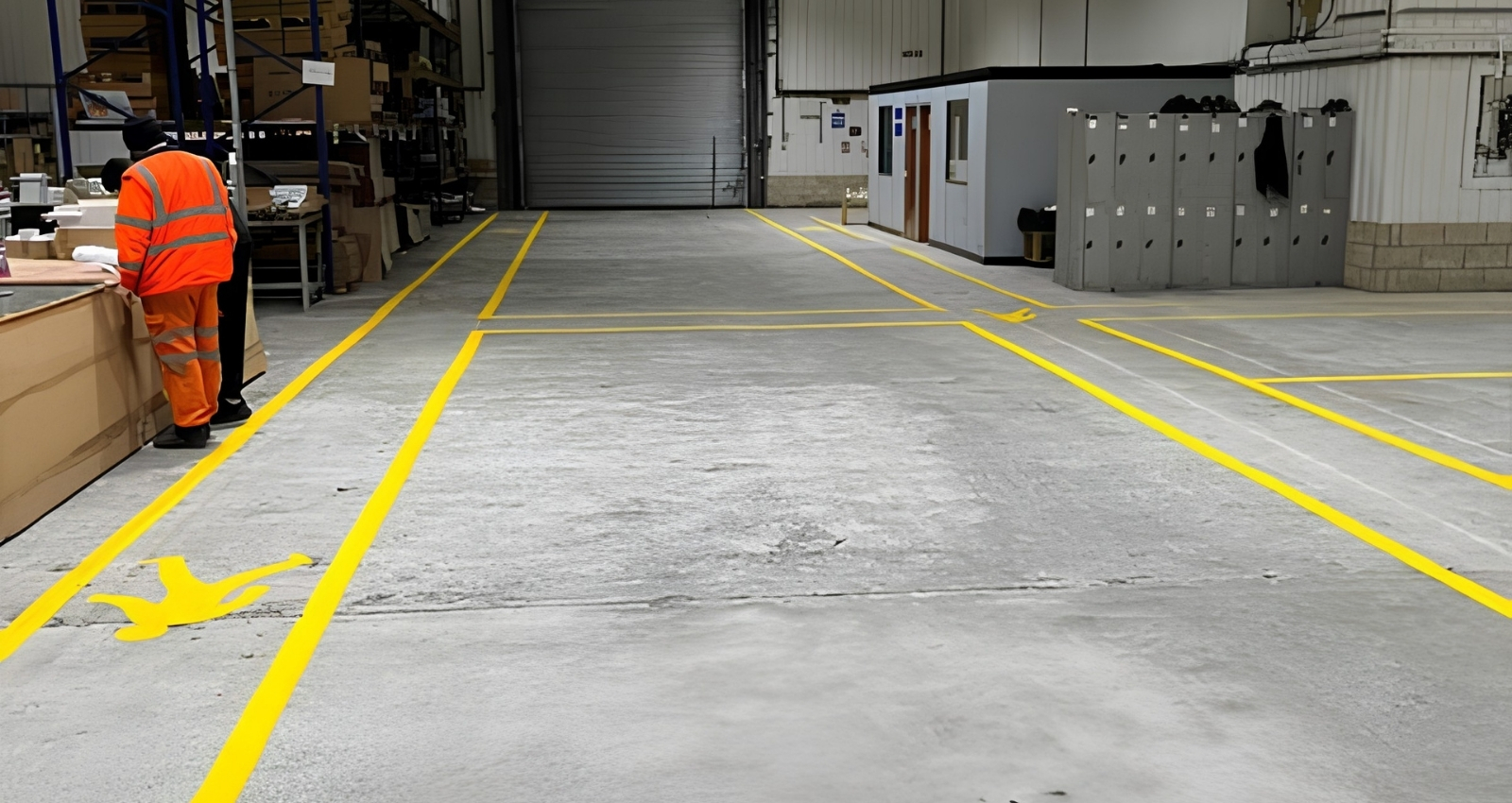
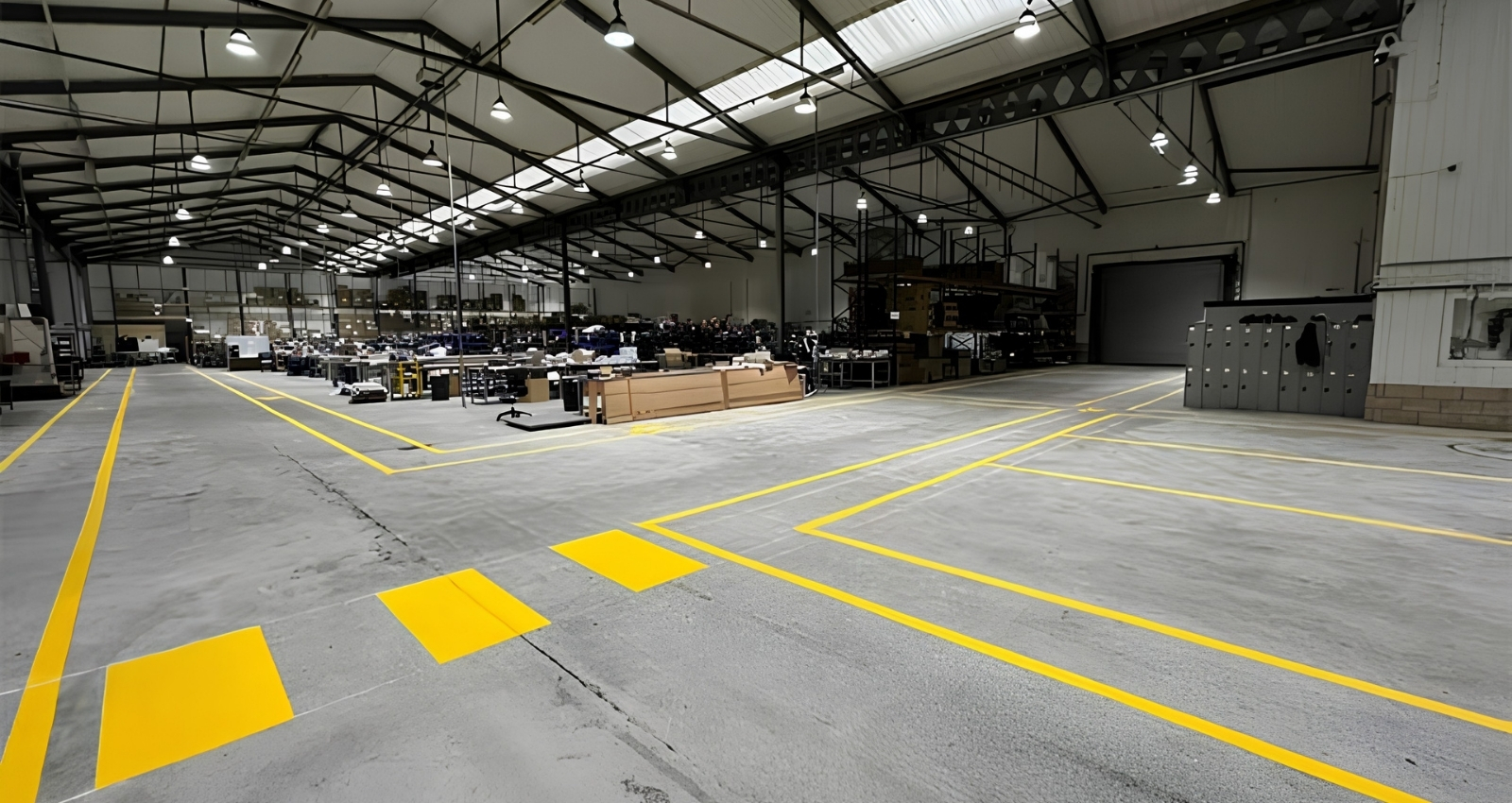
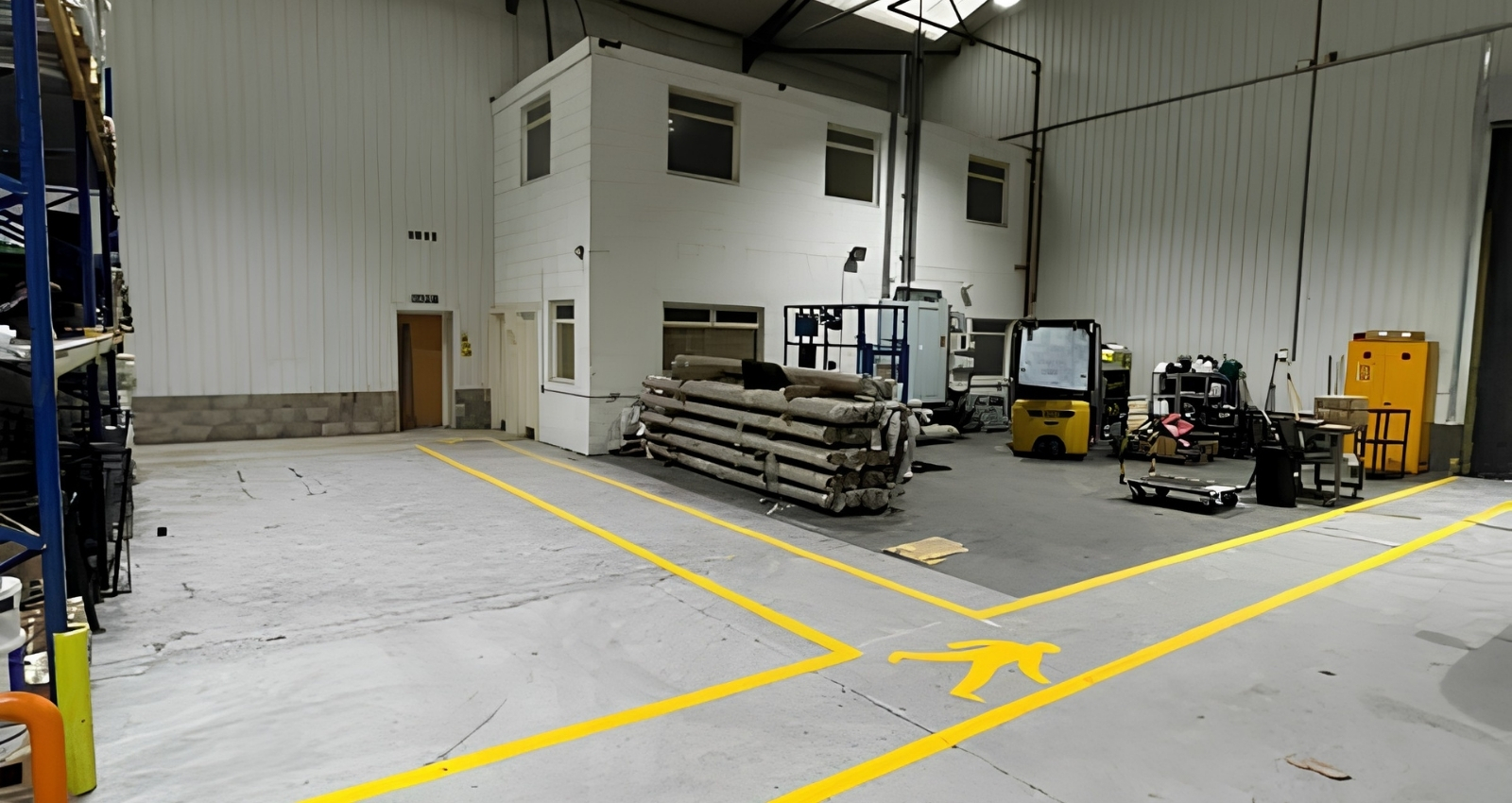
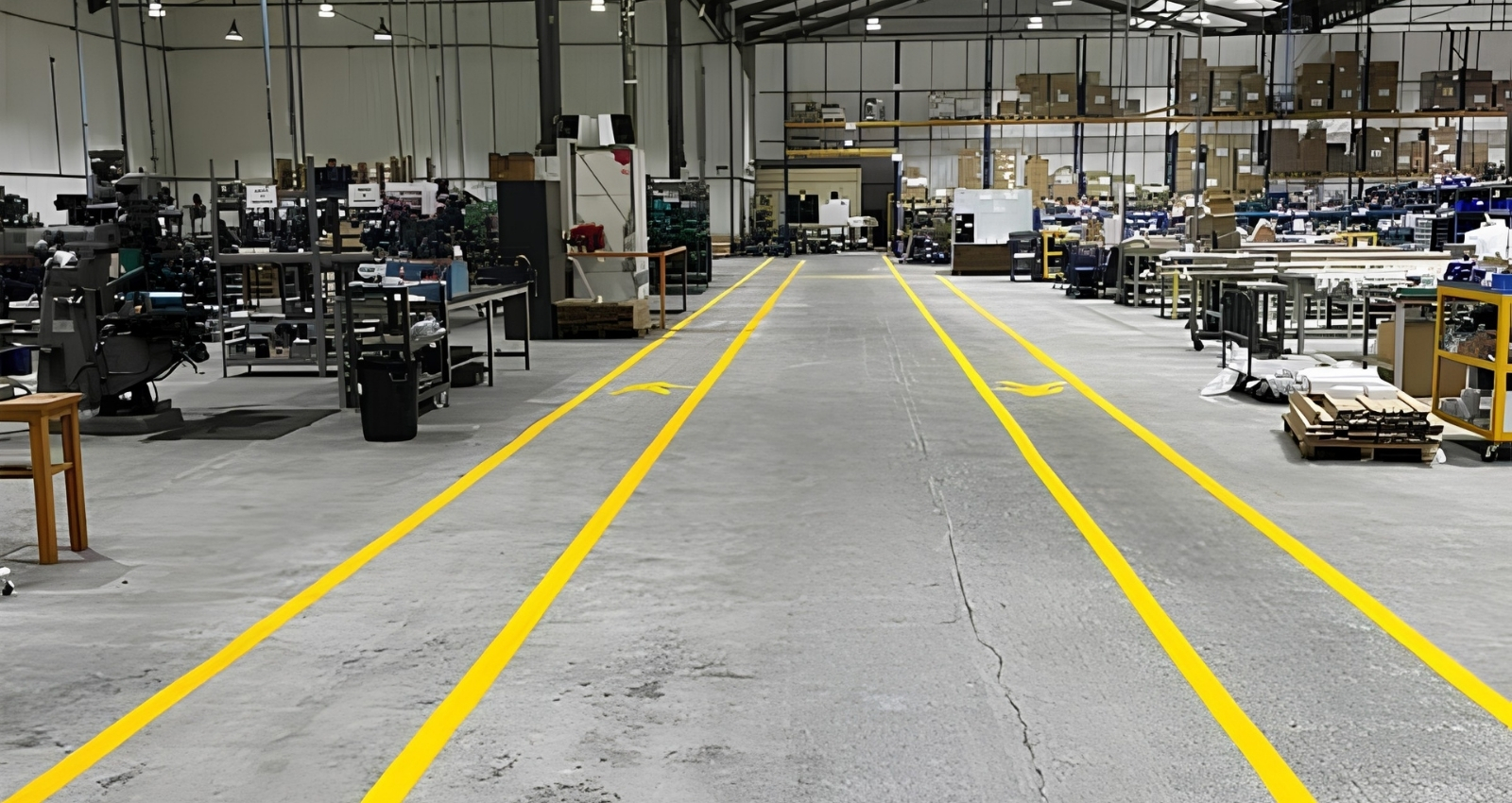
Pedestrian walkways guide employees safely through the building while clearly separating them from forklift routes. Vehicle lanes help operators move efficiently between storage areas and loading bays, reducing unnecessary crossing points and improving visibility.
Storage locations can be outlined to keep pallets and materials within designated areas, while loading zones help ensure deliveries and collections take place safely without obstructing operational routes.
Many warehouses also benefit from clearly marked emergency exits, fire equipment locations, inspection areas, quarantine zones and waste collection points. Together, these markings create a structured environment that’s easier to navigate and simpler to manage on a daily basis.
Rather than simply painting lines on a floor, professional warehouse marking is about creating a logical system that supports the way the entire facility operates.
Choosing the right marking system
Selecting the correct floor marking system is just as important as planning the layout itself.
Warehouse floors are subjected to constant wear from forklift trucks, pallet movements, machinery and foot traffic, so durability should always be a key consideration.
The most appropriate solution depends on several factors, including the condition of the concrete floor, the level of traffic and how the facility is used.
For many industrial environments, a single-pack epoxy floor marking system provides an excellent balance of durability, adhesion and visibility. It produces crisp, high-visibility markings that bond well to concrete surfaces while standing up to the demands of busy warehouses and manufacturing facilities.
Choosing the correct system from the outset helps ensure markings remain visible for longer, reducing maintenance requirements while continuing to provide clear guidance throughout the workplace.
Warehouse floor markings are an investment, not a maintenance cost
One of the biggest misconceptions surrounding warehouse floor markings is that they’re simply another maintenance expense. In reality, well-planned floor markings are an investment in the way a warehouse functions every day.
When people know exactly where they should walk, where materials should be stored and which routes forklifts should follow, the entire operation becomes more organised. Time isn’t wasted navigating around poorly positioned pallets, searching for designated areas or dealing with unnecessary obstructions.
A well-marked warehouse also helps reinforce good housekeeping. Storage bays remain clearly defined, waste collection points are easier to identify and employees are more likely to keep materials within designated areas. Over time, this contributes to a cleaner, safer and more efficient workplace.
For many businesses, the improvements aren’t dramatic overnight. Instead, they become part of the daily routine, helping operations run more smoothly while reducing the small inefficiencies that can build up over time.
When should warehouse floor markings be renewed?
Warehouse floor markings are designed to withstand demanding industrial environments, but no marking system lasts forever.
Forklift trucks, pallet movements, machinery, heavy foot traffic and regular cleaning all contribute to gradual wear. As markings become less visible, they become less effective at guiding movement around the facility.
One of the most common mistakes we see is businesses waiting until markings have almost disappeared before arranging a refresh. By that stage, employees may already be creating their own walking routes, storage areas can begin creeping beyond their designated boundaries and vehicle routes become less obvious.
Refreshing warehouse line markings before they become heavily worn is normally far more cost-effective than allowing them to deteriorate completely. It also helps maintain a consistently professional working environment rather than allowing standards to decline over time.
Regular inspections allow areas showing signs of wear to be identified early, helping businesses plan maintenance around their operational requirements rather than reacting when problems develop.
Colour plays an important role in warehouse safety
Most people immediately recognise yellow floor markings, but colour selection within a warehouse isn’t simply about appearance.
Different colours are often used to distinguish between different types of operational areas, making it easier for employees and visitors to understand the layout at a glance.
For example, pedestrian walkways are frequently marked in high-visibility yellow because they stand out clearly against concrete floors. Other colours may be used to identify storage locations, hazardous areas, inspection zones or equipment locations, depending on the site’s requirements.
Consistency is equally important.
Using colours logically throughout the warehouse creates an environment that’s easier to understand, particularly for contractors, delivery drivers and visitors who may be unfamiliar with the building.
When planning warehouse line markings, colour should always support the overall layout rather than becoming an afterthought.
Planning today for tomorrow’s warehouse
Warehouses rarely remain unchanged for long.
Production increases, storage requirements evolve and businesses invest in new machinery or automation. What works perfectly today may not provide the same level of efficiency in five years’ time.
That’s why we encourage businesses to think beyond their immediate requirements.
For example, leaving space for future storage expansion, additional workstations or revised forklift routes can reduce the need for extensive alterations later. Similarly, creating flexible layouts allows operational changes to be introduced without redesigning the entire warehouse.
Forward planning also helps businesses accommodate changing health and safety requirements while maintaining an organised working environment.
Taking a long-term view during the planning stage often results in a warehouse that’s easier to adapt as the business grows.
Common mistakes businesses make
After working with warehouses and manufacturing facilities for many years, certain issues appear time and time again.
Perhaps the most common is assuming the existing layout is the best layout.
Many warehouses have evolved gradually over several years. Storage racking has been relocated, machinery added and production areas expanded, yet the original floor markings have remained largely unchanged. As a result, pedestrian routes can become less practical and vehicle movements more complicated than they need to be.
Another frequent mistake is focusing purely on replacing worn markings without reviewing how the warehouse currently operates. Refreshing existing lines may improve visibility, but it also represents an opportunity to make improvements that could increase efficiency for years to come.
Businesses also sometimes underestimate the importance of preparation. Applying new markings to an inadequately prepared floor can reduce durability and affect the quality of the finished installation. Proper preparation helps ensure markings adhere correctly and continue performing in demanding industrial environments.
Finally, delaying maintenance often creates unnecessary expense. Small areas of wear are usually straightforward to address, whereas allowing markings to deteriorate across an entire warehouse can result in more extensive work being required.
Choosing the right floor marking system
The marking system used within a warehouse has a direct impact on durability, visibility and long-term performance.
Busy industrial environments require markings capable of withstanding constant vehicle movements, heavy loads and daily wear. Selecting the correct system from the outset helps reduce maintenance requirements while ensuring markings remain bright and easy to follow.
For many warehouse and manufacturing environments, a single-pack epoxy floor marking system offers an excellent solution.
This type of system provides excellent adhesion to properly prepared concrete floors while producing crisp, high-visibility markings capable of standing up to demanding industrial use. It also offers a durable finish that helps maintain clearly defined pedestrian walkways, forklift routes and operational areas over time.
Choosing the right system should always take account of how the facility is used, the condition of the existing floor and the level of traffic experienced throughout the working day.
An experienced contractor can advise on the most appropriate solution to ensure the finished installation delivers the best possible long-term performance.
Learning from real projects
No two warehouses are identical, which is why practical experience is so valuable.
We’ve worked on projects ranging from manufacturing facilities and distribution centres to industrial warehouses, each presenting its own operational challenges. Some require clearly defined pedestrian walkways through busy production areas, while others focus on improving forklift routes, creating new storage zones or refreshing worn floor markings without disrupting daily operations.
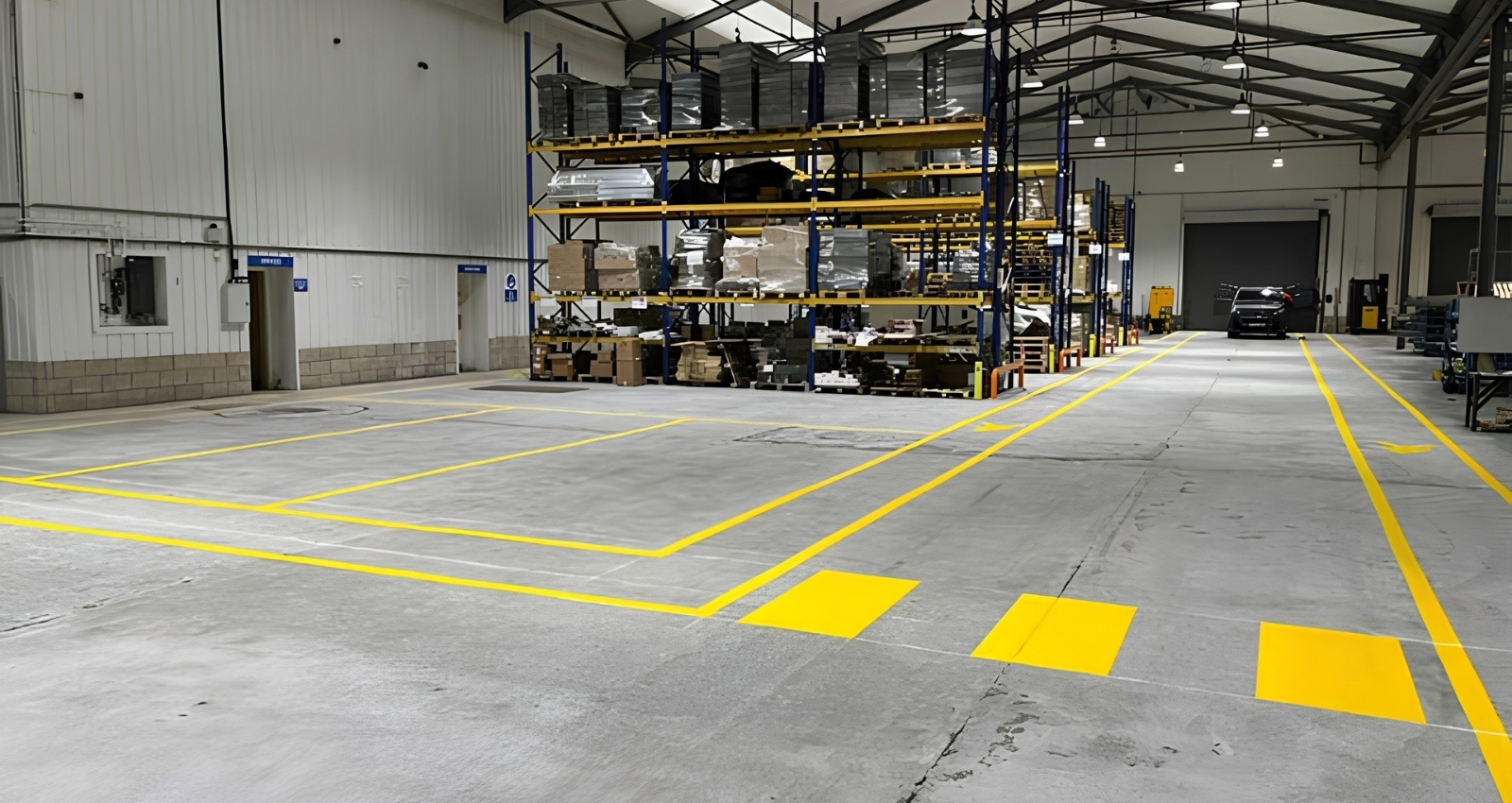
A recent project involved installing internal walkway markings within a busy manufacturing facility using a single-pack epoxy floor marking system. The completed layout created highly visible pedestrian routes and crossing points that helped improve workplace safety while supporting the client’s existing workflow.
If you’d like to see how carefully planned warehouse floor markings can transform a working environment, take a look at our Internal Walkway Markings for a Manufacturing Company project within our portfolio.
Real projects like this demonstrate that successful warehouse line marking isn’t simply about applying paint to a floor. It’s about understanding how the facility operates and designing markings that make everyday activities safer, clearer and more efficient.
Choosing the right warehouse line marking contractor
Once you’ve decided to invest in new warehouse floor markings, choosing the right contractor is just as important as deciding on the layout itself.
Warehouse environments are often busy, safety-critical workplaces where disruption needs to be kept to an absolute minimum. A professional contractor should take the time to understand how your facility operates before recommending a marking system or proposing a layout.
Rather than simply replacing existing markings, it’s worth asking whether the current layout still reflects the way your warehouse functions today. Businesses evolve over time, with changes to storage systems, machinery, production areas and traffic routes. Reviewing these changes before work begins often leads to improvements that increase efficiency as well as safety.
An experienced contractor should also advise on the most suitable marking system for your environment. For many industrial premises, a single-pack epoxy floor marking system provides a durable, high-visibility solution capable of withstanding the demands of a busy warehouse while delivering long-lasting performance.
Most importantly, they should understand that warehouse line markings are part of the wider operation of the business, not simply painted lines on a concrete floor.
The value of planned maintenance
One of the easiest ways to protect your investment is through regular inspection and planned maintenance.
Warehouse floor markings naturally experience wear over time, particularly in areas used by forklift trucks, pallet trucks and heavy machinery. Waiting until markings have almost disappeared can create unnecessary safety risks and often results in larger sections requiring replacement.
By reviewing the condition of floor markings periodically, businesses can identify areas beginning to deteriorate and refresh them before they become a problem. This helps maintain a professional working environment while avoiding unnecessary disruption to daily operations.
Planned maintenance also provides an opportunity to review whether the existing layout continues to meet operational requirements. As warehouses expand or production processes change, relatively small adjustments to floor markings can often deliver significant improvements in efficiency.
Why professionally installed warehouse line markings make a difference
There is a noticeable difference between a warehouse where floor markings have been carefully planned and one where they have simply been applied.
Professionally designed warehouse line markings create a logical flow throughout the building. Employees instinctively know where they should walk, forklift operators can follow clearly defined vehicle routes and storage areas remain organised because boundaries are easy to identify.
These improvements contribute to a workplace that’s safer, more efficient and easier to manage every day.
Clear floor markings also create a positive impression for visitors, auditors and customers touring the facility. They demonstrate that the warehouse is well maintained and that safety and organisation are taken seriously throughout the business.
While warehouse line markings may seem like a relatively small part of the overall operation, they influence how people move around the building every single day. When designed properly, they quietly support the smooth running of the entire facility.
Frequently Asked Questions
1. What are warehouse line markings used for?
Warehouse line markings are used to identify pedestrian walkways, forklift routes, storage areas, loading zones, hazardous areas and other operational spaces. They help improve workplace safety, organisation and traffic flow throughout industrial facilities.
2. What is the best floor marking system for a warehouse?
The most appropriate system depends on the environment, traffic levels and the condition of the floor. For many industrial applications, a single-pack epoxy floor marking system provides a durable, highly visible finish that’s well suited to warehouse and manufacturing environments.
3. How long do warehouse floor markings last?
The lifespan varies depending on the amount of traffic, the condition of the concrete floor and the marking system used. Regular inspections and planned maintenance help ensure markings remain clearly visible and continue performing effectively.
4. Can warehouse floor markings be installed without stopping production?
In many cases, yes.
Projects can often be carefully planned and completed in phases or during quieter operational periods to minimise disruption while maintaining safe access around the facility.
5. Why are pedestrian walkways important in a warehouse?
Clearly marked pedestrian walkways help separate people from moving vehicles such as forklifts and pallet trucks. They improve visibility, reduce confusion and form an important part of a warehouse’s overall health and safety procedures.
6. Should warehouse floor markings be reviewed regularly?
Yes.
Warehouses continually evolve, with changes to storage layouts, machinery and traffic routes. Reviewing floor markings periodically helps ensure the layout continues to support the way the facility operates while maintaining high safety standards.
Conclusion
Warehouse line markings play a far greater role than many businesses realise.
When carefully planned and professionally installed, they help improve workplace safety, create a more organised environment and support the efficient movement of employees, vehicles and materials throughout the facility.
Whether you’re operating a manufacturing plant, distribution centre or warehouse, investing in clear, durable floor markings is an investment in the long-term performance of your business.
From clearly defined pedestrian walkways and forklift routes to storage areas and safety zones, every marking should have a purpose. When those markings are reviewed regularly and maintained to a high standard, they continue supporting safe and efficient operations for years to come.
As your warehouse evolves, your floor marking layout should evolve with it. Taking the time to review how your facility operates today can often uncover opportunities to improve both safety and productivity without making major structural changes.
Looking to Improve Your Warehouse Floor Markings?
Whether you’re planning a new warehouse, refurbishing an existing facility or simply refreshing worn floor markings, we’re here to help.
Since 1994, we’ve delivered professional warehouse line markings, factory floor markings and industrial floor marking solutions for manufacturing facilities, warehouses, logistics centres and distribution hubs across Birmingham, the West Midlands and throughout the UK.
From planning the layout through to selecting the most appropriate marking system, we work closely with every client to deliver durable, high-quality results that improve safety, organisation and operational efficiency.
Contact us today for a free, no-obligation quotation and expert advice on your warehouse line marking project.