

Everything Property Managers, Business Owners and Contractors Need to Know
Commercial car park line marking is about much more than painting lines.
Most people don’t think about a car park until something goes wrong.
Perhaps drivers are parking across two bays because the markings have faded. Maybe customers are unsure which way to drive around the site, or pedestrians are walking through vehicle routes because the designated walkway can no longer be seen. Sometimes the problem isn’t safety at all – it’s simply that a tired-looking car park creates a poor first impression before anyone even walks through the door.
We’ve seen all of these situations over the years, and they all have one thing in common. They usually develop gradually. A line here fades a little. An arrow becomes difficult to distinguish. A disabled parking symbol begins to disappear. Because the deterioration happens over months or years, it’s easy to overlook until the problems become obvious.
Commercial car park line marking isn’t simply about making a site look smart. It’s about creating an organised environment where vehicles and pedestrians can move safely, where available space is used efficiently and where visitors immediately feel confident they’ve arrived somewhere that’s professionally managed.
Whether it’s a supermarket, distribution centre, school, office complex, retail park, manufacturing facility or healthcare site, clear and durable markings are an essential part of keeping the site operating smoothly every day.
Why line marking has a bigger impact than most businesses realise
A well-designed line marking scheme quietly performs hundreds of tasks every single day without anybody noticing.
Drivers instinctively know where to park. Delivery vehicles understand where they should stop. Visitors naturally follow pedestrian walkways towards entrances. Emergency access routes remain unobstructed. Accessible parking bays are easy to identify, while directional arrows reduce confusion and improve the overall flow of traffic.
When those markings begin to disappear, however, the entire site starts to become less efficient.
One of the most common issues we encounter is businesses assuming that faded markings are simply an appearance issue. In reality, they often have a direct impact on how people behave. Drivers begin creating their own parking spaces, delivery vehicles stop in unsuitable locations and pedestrians take the shortest route rather than the safest one.
The consequences are usually subtle at first, but over time they can affect customer experience, workplace safety and even the capacity of the car park itself.
Maintaining clear, professional markings is therefore a practical investment rather than a cosmetic one. It helps businesses avoid unnecessary disruption while presenting an organised image to everyone arriving on site.
First impressions begin before customers enter your building
Businesses invest significant amounts in reception areas, offices and shop interiors, yet the first impression is often formed before anyone reaches the front door.
The condition of the external environment says a great deal about how an organisation operates.
Imagine arriving at two similar commercial premises.
At the first location, parking bays are clearly marked, pedestrian crossings are bright and visible, directional arrows are easy to follow and the entire site feels organised.
At the second, parking lines have almost disappeared, vehicles are parked inconsistently and worn markings leave visitors unsure where they should walk or drive.
Even before stepping inside, most people will instinctively feel more confident about the first business.
While visitors may never consciously compliment the quality of your line markings, they will notice when they’re poor. A well-maintained car park creates confidence because it communicates professionalism, attention to detail and a commitment to maintaining the property.
For organisations that regularly welcome customers, clients, contractors or suppliers, this first impression can have more influence than many people realise.
Every commercial site has different requirements
One misconception is that every car park should follow exactly the same layout.
In reality, every site functions differently.
A busy retail park experiences constant vehicle movement throughout the day, with customers arriving and leaving every few minutes. A warehouse may have relatively few visitor vehicles but frequent HGV movements, forklift traffic and designated loading areas. Schools need clearly separated pedestrian routes during drop-off and collection times, while hospitals must prioritise accessibility, ambulance access and visitor parking.
Because every environment operates differently, line marking should never be treated as a one-size-fits-all service.
Before any markings are applied, it’s important to understand how the space is actually used.
Questions worth considering include:
- Where does traffic naturally build up?
- Do pedestrians and vehicles currently share the same routes?
- Could the existing layout be improved?
- Are emergency access routes clearly defined?
- Is there enough accessible parking?
- Could additional parking spaces be created without compromising safety?
Sometimes a relatively small redesign can significantly improve how efficiently a site operates.
We’ve worked on projects where simply repositioning bays, altering traffic flow or introducing clearer directional markings has reduced congestion while making the entire car park easier to navigate.
This is why planning is just as important as the application itself.
It’s not just about parking bays
When people think about line marking, they often picture rows of white parking spaces.
Modern commercial sites require much more than that.
A professionally planned car park combines different types of markings, each performing a specific function within the overall layout.
Parking bays are only one part of the picture.
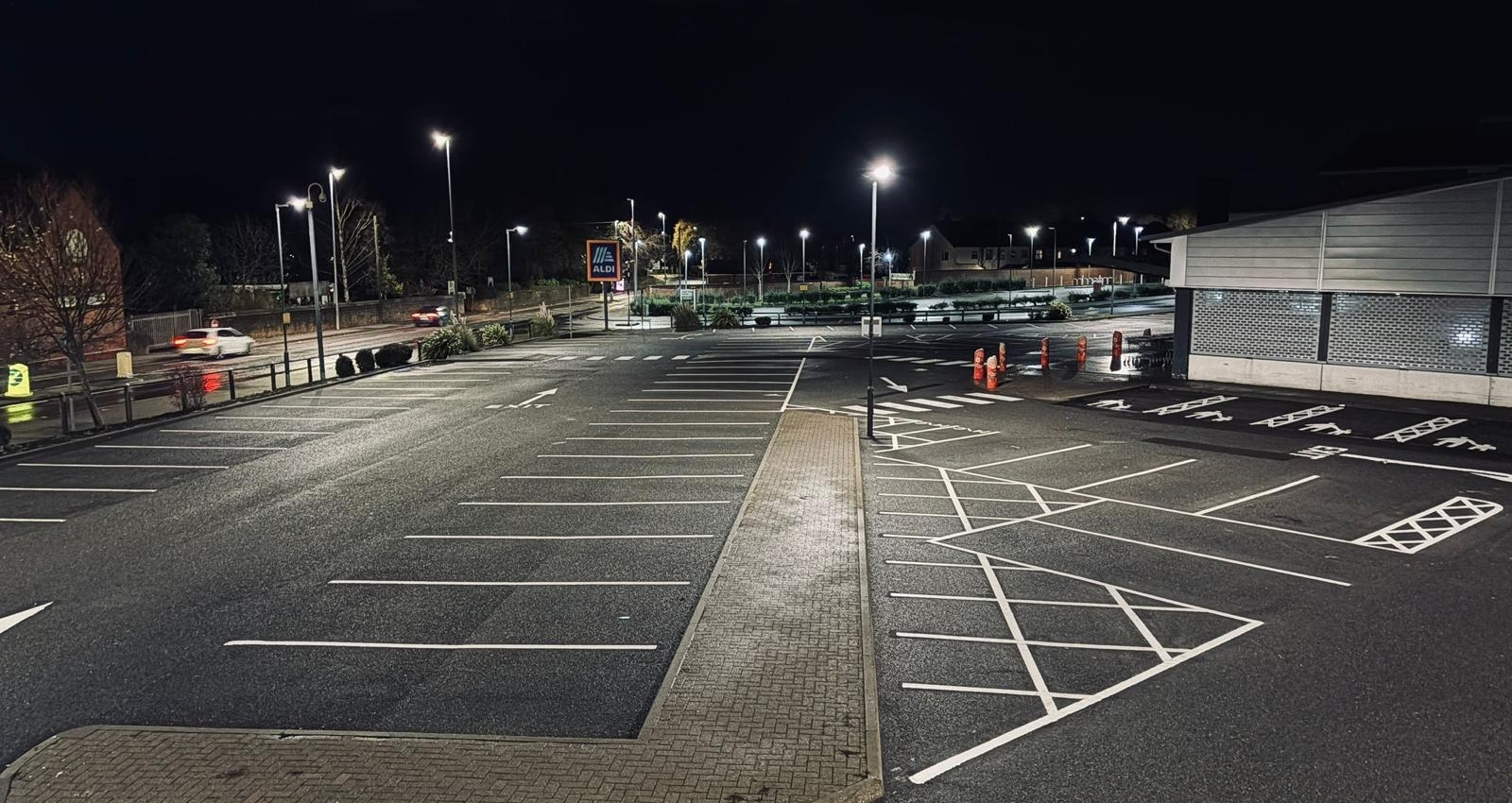
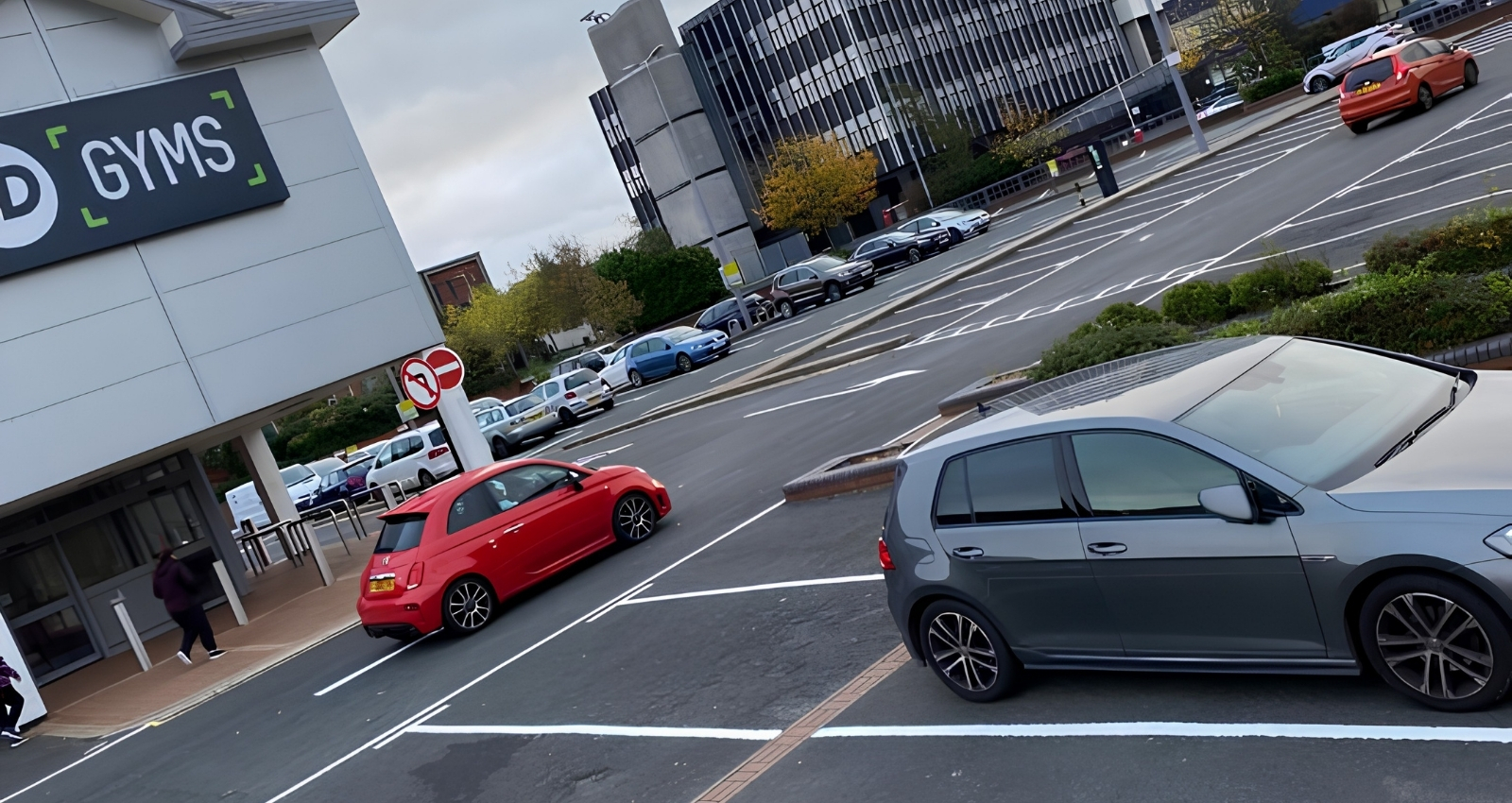
Directional arrows guide vehicles safely around the site and reduce confusion in busy areas. Clearly marked pedestrian walkways help separate people from moving traffic, particularly around schools, hospitals and industrial premises where safety is paramount.
Accessible parking bays require careful positioning and highly visible symbols so they’re easy to identify. Parent and child spaces need additional room for safe access, while loading bays must remain unobstructed to keep deliveries running efficiently.
Increasingly, businesses are also introducing dedicated electric vehicle charging bays. As the number of electric vehicles continues to grow, these areas need clear identification to prevent conventional vehicles blocking charging points.
There are also hatched safety zones, keep clear markings, emergency access routes, loading restrictions and other specialist markings that help a site function efficiently.
When all of these elements work together, the result isn’t simply a better-looking car park. It’s a site that’s easier to use, safer for everyone and capable of handling daily traffic far more effectively.
Why experience matters when planning a line marking project
Applying road marking materials is only one part of delivering a successful project.
Understanding how people and vehicles interact with a space is equally important.
It’s often tempting to simply repaint what’s already there, particularly if the existing layout has been in place for many years. However, older layouts aren’t always the most efficient.
Businesses evolve. Vehicle sizes change. Accessibility expectations improve. Electric vehicle charging becomes more common. Traffic volumes increase.
What worked well ten or fifteen years ago may no longer provide the safest or most efficient arrangement today.
Before beginning any project, it’s worth asking whether the layout itself still meets the needs of the site.
Sometimes the answer is yes.
Sometimes a few relatively simple improvements can increase capacity, improve traffic flow and create a much better experience for everyone using the premises.
Taking the time to review the layout before work begins often delivers benefits that continue long after the final markings have dried.
Choosing the right line marking material
One of the first questions we’re asked is whether thermoplastic markings are always the best option. The simple answer is that it depends entirely on the environment.
There isn’t a single product that’s right for every project. The most suitable solution depends on factors such as traffic volume, the type of vehicles using the site, the condition of the surface and the expected lifespan of the markings.
For busy commercial roads, industrial estates and high-traffic car parks, thermoplastic markings are often the preferred choice because of their durability. Applied at high temperatures, the material bonds firmly to the surface, producing crisp, highly visible markings that can withstand constant use.
However, that doesn’t automatically make thermoplastic the right solution for every site.
Private commercial premises, office developments and lower-traffic environments can often benefit from specialist road marking paints that provide an excellent finish while remaining a cost-effective option.
Rather than choosing a product simply because it’s the most expensive or the most commonly used, it’s far better to consider how the site operates every day. Selecting the appropriate material from the outset can improve longevity, reduce maintenance requirements and deliver better value over the long term.
How long should commercial line markings last?
This is one of the most common questions property managers ask, but there isn’t a simple answer.
The lifespan of line markings depends on a number of factors working together.
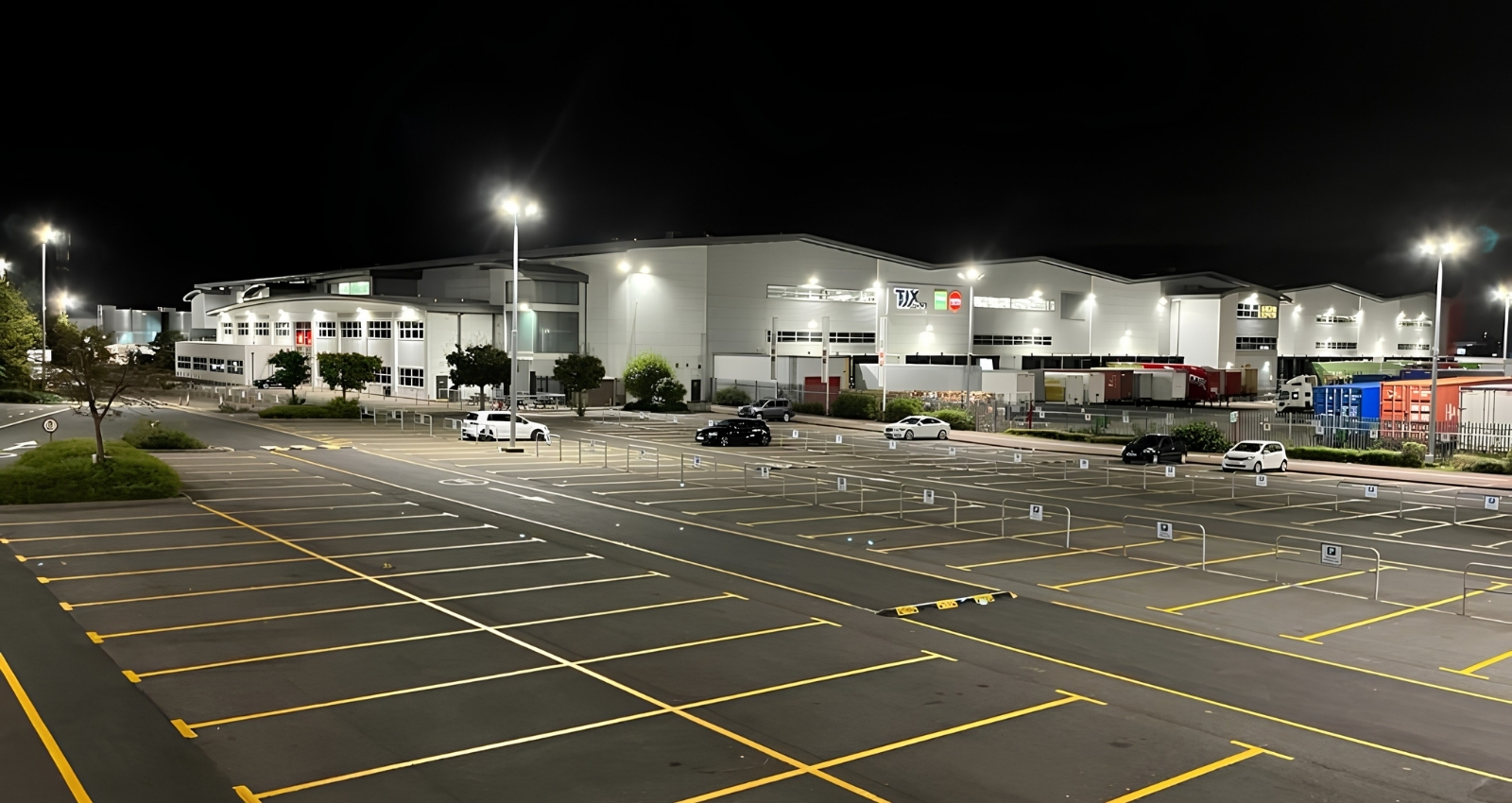
A retail park welcoming thousands of vehicles each week will naturally experience more wear than a private office car park with limited daily traffic. Similarly, a warehouse with regular HGV movements places very different demands on the surface compared with a visitor car park outside a healthcare facility.
Weather also plays a part. Constant exposure to rain, sunlight, freezing temperatures and standing water gradually affects both the markings and the surface beneath them.
The quality of the original installation is equally important. Thorough preparation, suitable materials and professional application all contribute to markings that remain visible for longer.
For this reason, it’s impossible to promise that every line marking project will last for a specific number of years. What can be said with confidence is that investing in quality workmanship and suitable materials generally reduces the need for frequent repairs and helps maintain a professional appearance for much longer.
Why waiting too long usually costs more
Many organisations assume they’ll save money by delaying maintenance for another year.
In reality, the opposite is often true.
One of the most common situations we encounter is a car park where the markings have faded so gradually that nobody has noticed just how unclear they’ve become. Staff who use the site every day naturally adapt to the layout, but visitors don’t have that advantage.
As the markings continue to deteriorate, parking becomes inconsistent. Vehicles begin occupying more space than intended, reducing overall capacity. Pedestrian routes become harder to identify and customers may even question whether they’re parked correctly.
Eventually, the site reaches a point where a complete refresh is required.
Had the markings been maintained earlier, the work would often have been quicker, simpler and less disruptive.
Planned maintenance is almost always more cost-effective than waiting until the condition has deteriorated significantly. It also helps businesses maintain a consistently professional appearance rather than allowing standards to decline over time.
The hidden cost of poor traffic flow
When discussing line marking, most conversations focus on paint, materials or colours.
In reality, the greatest value often comes from improving how vehicles move around a site.
A poorly planned layout can create unnecessary congestion, especially during busy periods. Drivers hesitate because they’re unsure which direction to travel. Delivery vehicles struggle to access loading areas. Customers queue unnecessarily while searching for available spaces.
None of these problems may seem particularly serious on their own, but together they create frustration and reduce the overall efficiency of the premises.
Good line marking quietly solves many of these issues.
Simple improvements such as repositioning directional arrows, widening turning areas or introducing clearer pedestrian crossings can make a remarkable difference to the way a site functions.
In larger commercial environments, even small improvements to traffic flow can save time every day, reduce the likelihood of minor collisions and create a safer experience for everyone using the facility.
Safety should never be an afterthought
Every commercial site has a legal and moral responsibility to consider the safety of employees, visitors and contractors.
While line markings alone cannot prevent accidents, they play an important role in reducing unnecessary risk.
Clearly defined pedestrian routes help separate people from moving vehicles. Marked crossing points encourage safer movement around busy premises, while hatch markings protect areas that need to remain clear for visibility or emergency access.
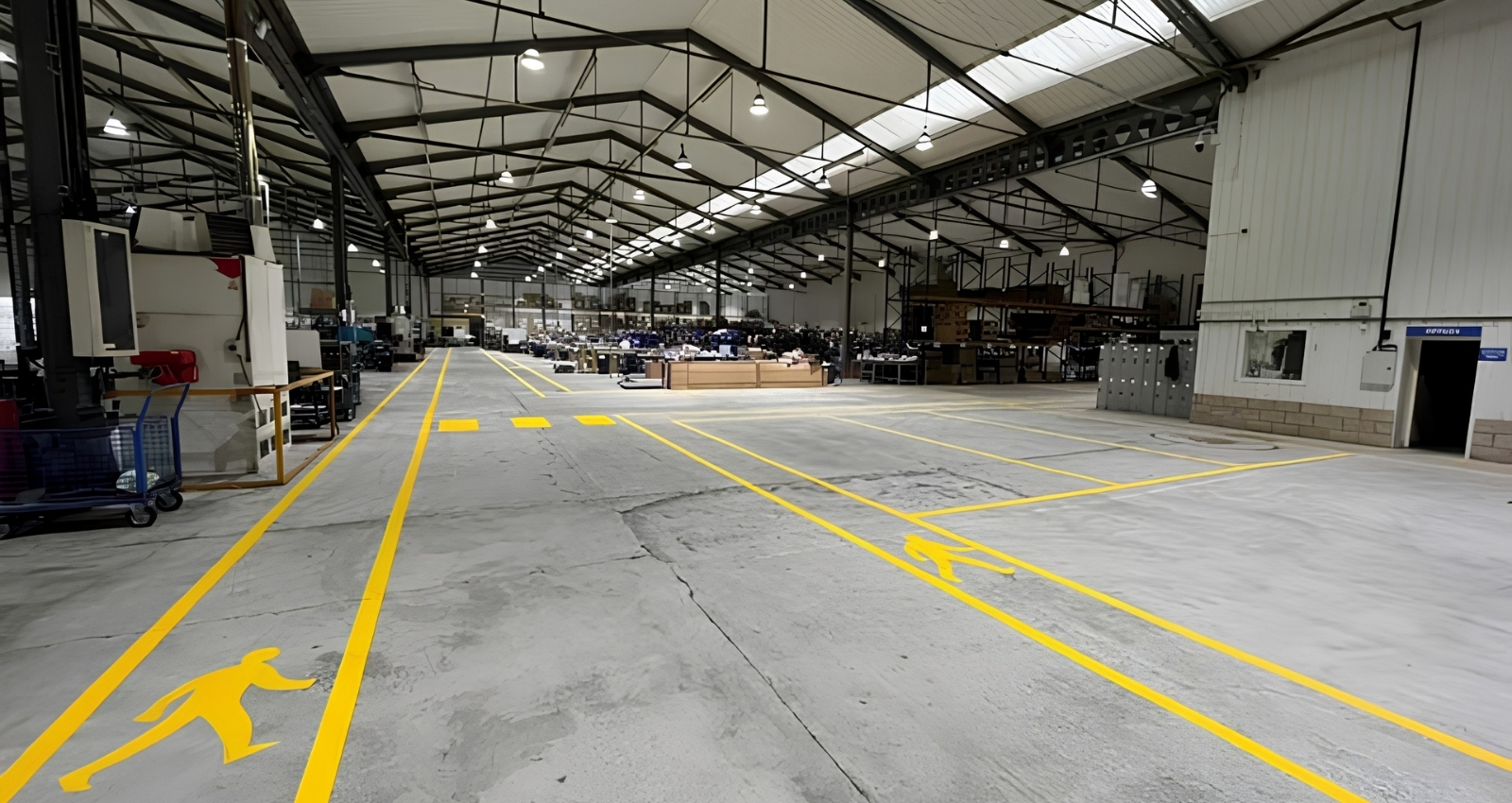
Warehouses and manufacturing facilities often require additional safety markings to distinguish vehicle routes, forklift operating areas, storage zones and pedestrian walkways. These markings become part of the site’s wider health and safety procedures, helping everyone understand how the workplace is organised.
Importantly, effective line marking doesn’t rely solely on compliance. It relies on clarity.
People are far more likely to follow routes and restrictions when markings are bright, consistent and easy to understand.
Accessibility isn’t just about compliance
Accessible parking is sometimes viewed simply as another requirement on a checklist.
In reality, it’s about ensuring every visitor can access your premises safely and with dignity.
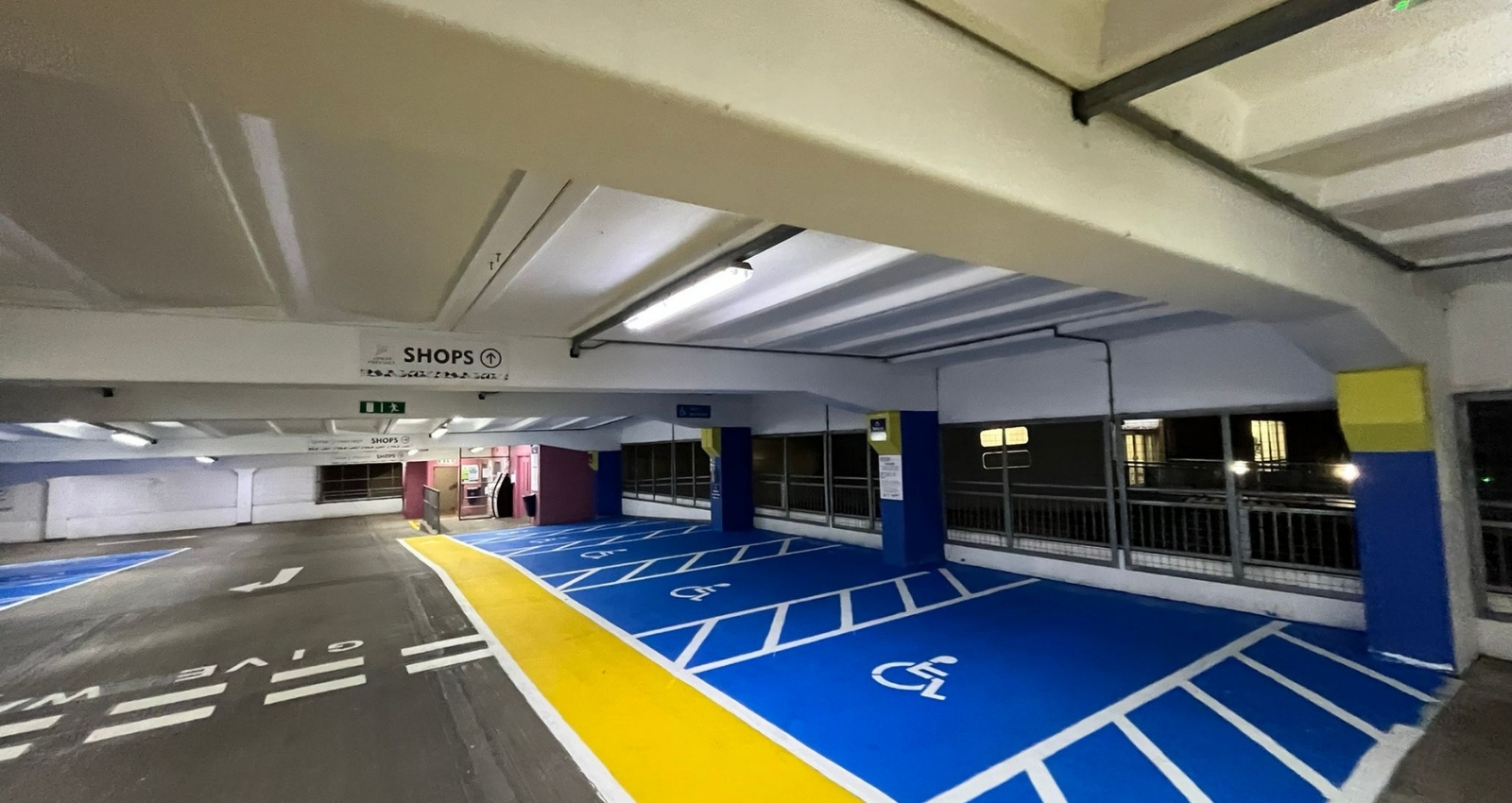
Clearly marked accessible bays should be positioned thoughtfully, allowing convenient access to entrances while providing sufficient space for wheelchair users and those with limited mobility to enter and exit their vehicles comfortably.
Equally important is ongoing maintenance.
A faded wheelchair symbol or worn hatch markings can create uncertainty for all users. Regular inspection helps ensure these spaces remain immediately recognisable and continue serving the purpose for which they were designed.
As expectations around accessibility continue to evolve, businesses that maintain clear and well-presented facilities demonstrate that they value every visitor’s experience from the moment they arrive.
Common mistakes we regularly see
After many years working on commercial sites, certain issues appear time and again.
One of the biggest is assuming that the existing layout must be the best layout simply because it’s always been there. In reality, many car parks were designed decades ago, long before electric vehicle charging bays, modern accessibility standards or today’s larger vehicles became commonplace.
Another common mistake is focusing entirely on price.
While cost is naturally an important consideration, choosing the cheapest quotation doesn’t always deliver the best long-term value. Factors such as preparation, material quality, workmanship and project planning all influence how well the finished markings perform over time.
We also see businesses overlooking line marking until a problem becomes impossible to ignore. By then, what could have been a straightforward maintenance project may have developed into a more extensive refurbishment.
Perhaps the most avoidable mistake of all is treating line marking as an isolated task rather than part of the site’s wider maintenance strategy.
Just as buildings require regular upkeep, external areas benefit from periodic inspection and planned improvements. Keeping markings in good condition helps preserve the appearance, safety and functionality of the entire premises.
Investing in quality can reduce long-term costs
When budgets are under pressure, it’s understandable that organisations look carefully at every expenditure.
However, commercial line marking should be viewed as an investment rather than simply another maintenance cost.
Well-planned layouts maximise available space, improve traffic flow and reduce unnecessary confusion. Durable materials help minimise the frequency of future maintenance, while clear markings contribute to a safer environment for staff, customers and visitors alike.
Over the lifetime of a commercial property, these benefits often outweigh the initial investment.
The most successful projects aren’t necessarily those completed at the lowest cost. They’re the ones that continue performing effectively year after year with minimal disruption and ongoing maintenance.
By taking a long-term view, businesses can improve both the appearance and performance of their premises while avoiding many of the issues associated with poorly maintained external areas.
Choosing the right line marking contractor
Once you’ve decided your car park needs new or refreshed markings, selecting the right contractor becomes one of the most important decisions you’ll make.
At first glance, many quotations may appear similar. Most contractors will offer line marking services, but the quality of the finished project depends on far more than simply applying paint or thermoplastic to the surface.
Experience makes a significant difference.
A contractor who regularly works on commercial, industrial and public sector projects understands that every site operates differently. A busy retail park has different priorities from a manufacturing facility. A school requires a different approach to a logistics depot, while a hospital or healthcare setting demands careful planning to minimise disruption and maintain safe access at all times.
Before work begins, a good contractor should spend time understanding how your site operates rather than simply measuring the existing lines.
Questions should include:
- Are there times when the site is particularly busy?
- Can work be completed outside normal operating hours?
- Does the current layout still work efficiently?
- Are there opportunities to improve safety or traffic flow?
- Have accessibility requirements changed since the site was first marked?
These conversations often lead to small improvements that deliver long-term benefits.
The best projects aren’t always those completed the fastest. They’re the ones where careful planning results in a layout that continues performing well for years afterwards.
Our approach to commercial line marking
Every project begins with understanding how the space is used.
Rather than assuming the existing layout is correct, we assess how vehicles, pedestrians and delivery traffic move around the site. This allows us to identify opportunities to improve efficiency while maintaining safety and compliance.
For some customers, the work simply involves refreshing worn markings like for like. For others, it’s an opportunity to redesign areas that have become less effective over time.
Where appropriate, we can advise on introducing clearer pedestrian walkways, improving directional systems, creating additional parking capacity or incorporating dedicated areas such as EV charging bays, accessible parking spaces and loading zones.
Planning the project carefully also helps minimise disruption. Many commercial line marking projects can be scheduled during quieter periods, evenings or weekends, allowing businesses to continue operating with minimal interruption.
Our aim is always the same – to leave every site safer, easier to navigate and presented to the highest possible standard.
Looking beyond today’s requirements
Commercial properties continue to evolve.
Electric vehicles are becoming more common, accessibility expectations continue to improve and many organisations are reconfiguring their premises to make better use of available space.
For this reason, it’s worth thinking beyond immediate requirements when planning line marking work.
A car park that works perfectly today may need to accommodate additional charging points in the future. A warehouse may expand its storage areas, changing vehicle routes and pedestrian access. Retail developments often experience changes in customer behaviour that affect traffic flow.
Taking these factors into account during the planning stage can make future alterations much simpler and more cost-effective.
Good line marking isn’t just about solving today’s problems – it’s about creating a layout that continues working as your business evolves.
A well-maintained car park reflects a well-managed business
People naturally judge the condition of a property long before they step inside.
Fresh, clearly defined markings give visitors confidence that the premises are organised, maintained and professionally managed.
More importantly, they contribute to a safer environment for staff, customers, contractors and suppliers.
When businesses invest in maintaining external areas, they’re also investing in the overall experience of everyone who visits the site.
It may seem like a relatively small detail, but line marking influences how people move, where they park and how they interact with the environment every single day.
That’s why it deserves careful planning rather than being treated as an afterthought.
Frequently Asked Questions
1. How often should a commercial car park be re-marked?
There isn’t a fixed timescale because every site experiences different levels of traffic and wear. As a general rule, markings should be inspected regularly and refreshed before they become difficult to see. Waiting until they have almost disappeared often leads to unnecessary confusion and can increase maintenance costs.
2. What is the difference between thermoplastic and road marking paint?
Thermoplastic is a highly durable material that’s heated during application, making it ideal for heavily trafficked roads and commercial environments. Specialist road marking paints can also provide excellent results and are often suitable for private car parks and lower-traffic locations. The most appropriate choice depends on how the site is used.
3. Can line marking work be carried out while a business remains open?
In many cases, yes. Careful planning allows work to be completed in phases or outside normal operating hours, helping minimise disruption to staff, customers and day-to-day operations.
4. Can existing line markings be removed?
Yes. If a new layout is required or redundant markings need to be eliminated, specialist removal techniques can be used before applying the new design. This helps create a cleaner, more professional finish and avoids confusion caused by overlapping markings.
5. How can I tell if my car park layout needs redesigning?
If vehicles regularly park incorrectly, traffic builds up unnecessarily, pedestrian routes are unclear or you’ve introduced new facilities such as EV charging points, it may be worth reviewing the layout. Even relatively small changes can improve traffic flow, increase capacity and make the site easier to use.
6. Which types of businesses benefit from professional line marking?
Almost any organisation with vehicle access can benefit. This includes retail parks, supermarkets, schools, colleges, hospitals, warehouses, manufacturing facilities, office developments, industrial estates, hotels, leisure centres, apartment complexes and public sector organisations.
7. Why should line markings be inspected regularly?
Regular inspections help identify fading or damage before it becomes a safety issue. Keeping markings in good condition ensures the site remains easy to navigate, supports accessibility and helps maintain a professional appearance throughout the year.
Final thoughts
Commercial car park line marking is often overlooked because, when it’s done properly, it simply works.
Drivers know where to go. Pedestrians can move safely around the site. Deliveries operate efficiently, and visitors arrive with confidence.
Behind that seemingly simple outcome is careful planning, appropriate materials, skilled installation and ongoing maintenance.
Whether you’re responsible for a single commercial premises or managing multiple locations across the UK, investing in professional line marking is an investment in safety, organisation and the long-term appearance of your property.
Taking action before markings become severely worn helps maintain standards, reduce disruption and ensure your site continues operating as efficiently as possible.
Need Professional Commercial Car Park Line Marking?
Whether you’re refreshing faded markings, redesigning an existing layout or planning a completely new commercial development, we’re here to help.
Since 1994, we’ve delivered professional road and line marking solutions for businesses, schools, industrial sites, local authorities and commercial organisations throughout Birmingham, the West Midlands and across the UK.
Our experienced team can advise on the most suitable materials, improve traffic flow and create a layout that’s safe, practical and built to last.
Contact us today for a free, no-obligation quotation.